For small hotels and tourism properties in the Philippines
Give your hotel a clearer path from inquiry to direct booking.
Turn scattered inquiries into a smoother, more professional booking experience with a branded booking flow guests can open from Messenger, QR codes, website links, Facebook, Instagram, and TikTok.
- Clearer path to direct booking
- Works where guests already inquire
- Designed for small hotel teams
The reality of direct booking for many small hotels today
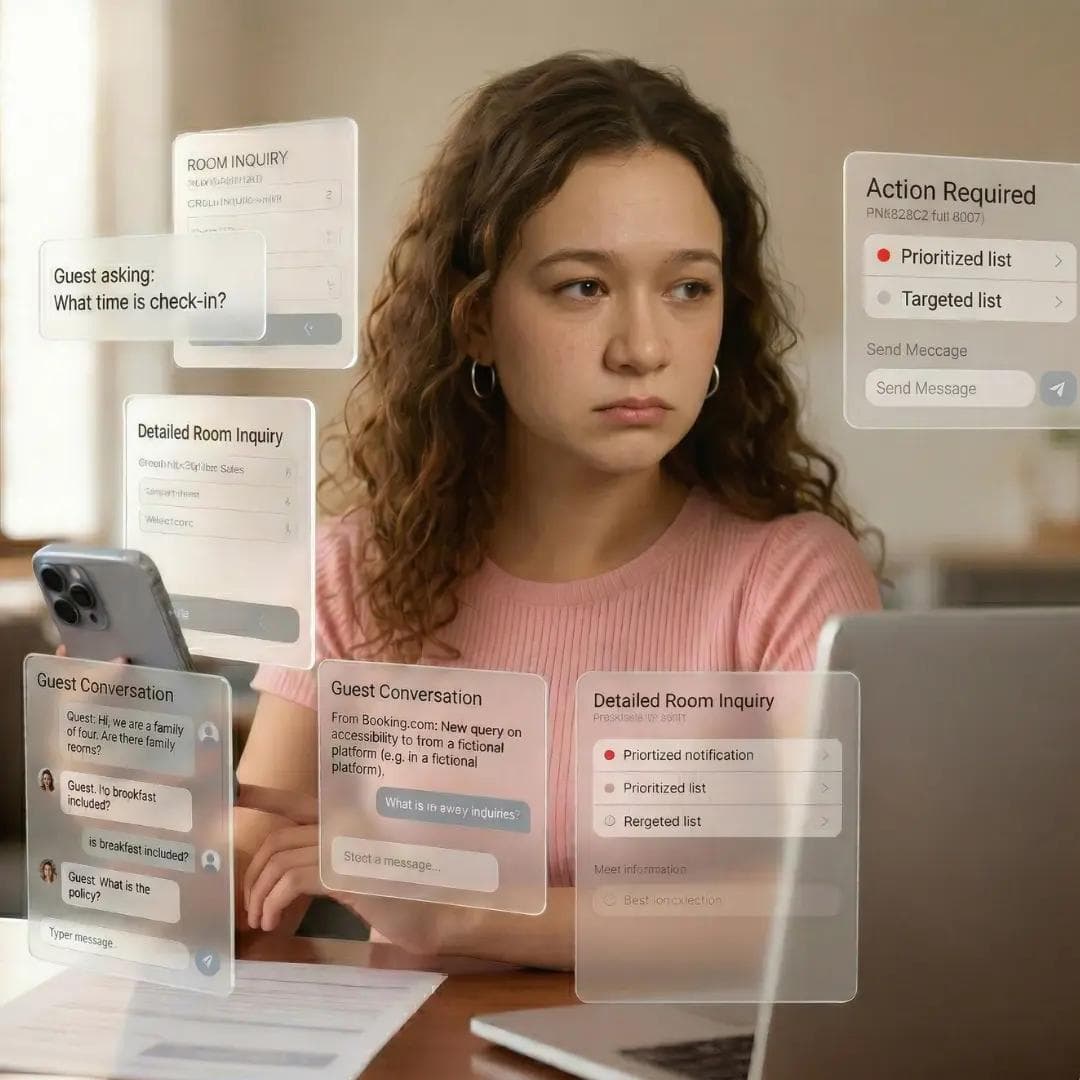
Serious inquiries often end up spread across Facebook page messages, OTA conversations, repeated guest questions, manual follow-ups, and booking details tracked through chats, notes, and internal coordination. What started as a practical way to manage bookings becomes harder to control as inquiries grow and guests expect a clearer, faster path to book.
Lost Booking Momentum
Interested guests slow down before they complete booking.
Missed Follow-Ups, Lost Revenue
Real interest slips away when follow-ups do not happen on time.
Friction
Friction Weakens Conversion
Delays, buried details, and unclear next steps make direct booking easier to abandon.
Too Much Repetitive Work
Staff spend time answering the same questions instead of moving bookings forward.
How manual booking friction affects direct bookings and revenue
When booking depends too much on manual handling, the cost is not only slower replies and repeated work. It also shows up in weaker booking momentum, missed follow-ups, unclear next steps, and interested guests who never make it to confirmed booking. For small properties carrying real operating costs, those missed opportunities matter.